Breathlessness
Difficulty breathing, particularly during physical activity, may occur when a structural heart condition affects cardiac function.
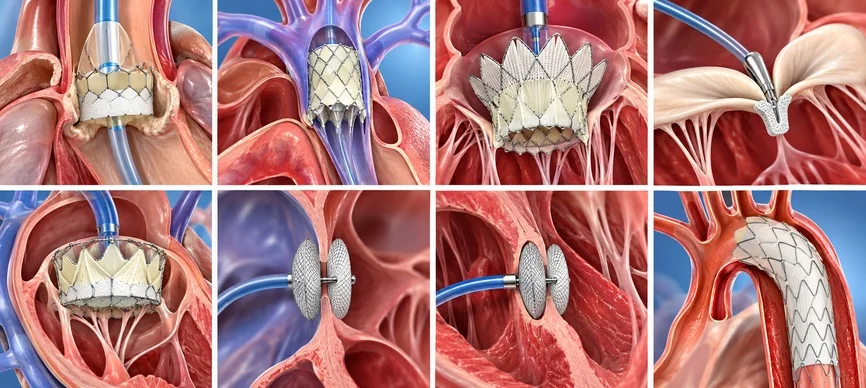
Structural heart conditions involve abnormalities affecting the heart's valves, chambers or other structures.
Some conditions may be present from birth, while others can develop over time. Appropriate imaging and specialist evaluation help determine the condition and available treatment options.
Difficulty breathing, particularly during physical activity, may occur when a structural heart condition affects cardiac function.

Persistent or unexplained tiredness can sometimes be associated with an underlying structural heart problem.
Some structural conditions may be associated with awareness of the heartbeat or reduced exercise tolerance.
Symptoms, medical history and physical findings are reviewed as part of the initial evaluation.
Appropriate imaging can help assess the heart's chambers, valves and other structures.
Findings are reviewed to determine whether observation, medical management or an intervention may be appropriate.
A minimally invasive valve replacement approach for selected patients with aortic valve disease.
02Catheter-based options may be considered for appropriately selected patients with significant mitral valve disease.
03Selected structural abnormalities may be treated using catheter-based techniques.
Sudden chest discomfort, severe breathlessness, fainting or rapidly worsening symptoms require prompt medical attention.
Clear answers to common questions about symptoms, evaluation and treatment.
View All FAQs→A structural heart intervention is a catheter-based treatment for problems involving the heart’s valves, walls or other structures. Examples include certain valve procedures and closure of suitable holes between the heart’s chambers.
An ASD is a hole present from birth between the heart’s two upper chambers. A significant defect can increase blood flow to the right side of the heart, causing enlargement and affecting its function over time.
Yes. Many secundum ASDs with suitable size and surrounding tissue can be closed using a device delivered through a catheter. Other types or unsuitable defects may require surgery.
A PFO is a flap-like opening between the upper heart chambers that remains after birth. Most do not require treatment. Closure may be considered in selected patients after an otherwise unexplained stroke and a detailed evaluation.
Suitable conditions include many ASDs, patent ductus arteriosus, selected ventricular septal defects, certain narrowed heart valves and narrowing of the aorta. Treatment depends on the defect’s anatomy and its effect on the heart.
