Assessment
Understanding your symptoms, diagnosis and treatment goals is the first step.
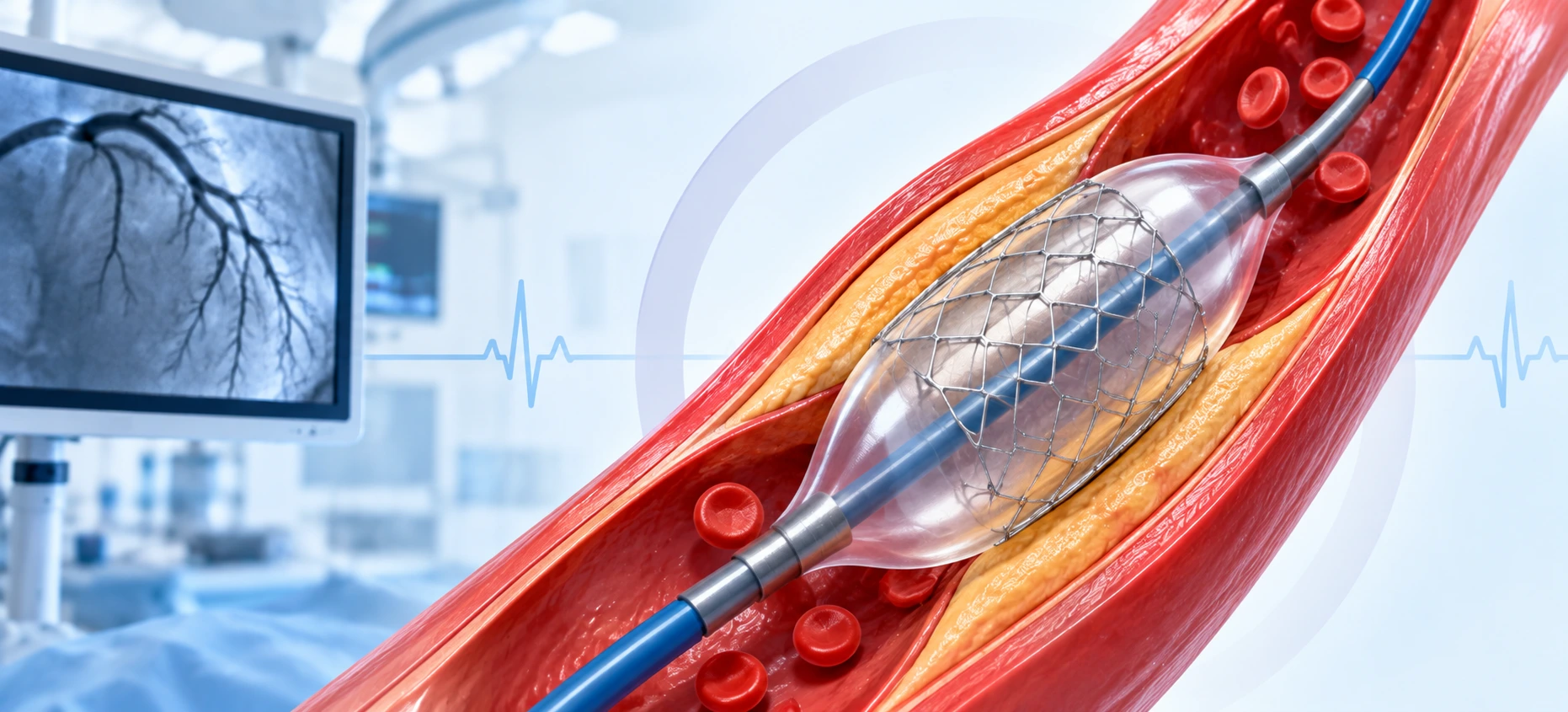
Coronary angioplasty, also known as PCI, is a catheter-based procedure used in selected patients to improve blood flow through a narrowed or blocked coronary artery.
A small balloon and, when appropriate, a stent may be used to restore and maintain the opening of the artery.
The decision depends on symptoms, coronary anatomy, the extent of disease, clinical urgency and the findings of coronary assessment.
Understanding your symptoms, diagnosis and treatment goals is the first step.

Imaging, anatomy and clinical findings help determine the appropriate approach.
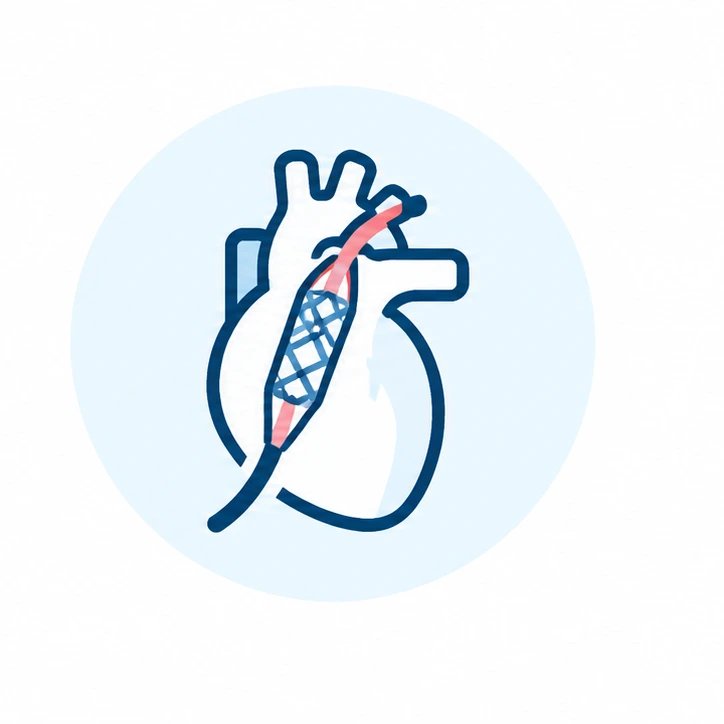
The selected catheter-based technique is performed with continuous clinical monitoring.
The coronary arteries are assessed to identify the location and severity of narrowing.
A guidewire and catheter are carefully advanced across the selected narrowed segment.
A balloon may be used to open the narrowed segment and a stent may be placed when appropriate.
The patient is monitored after the procedure and receives individualised medication and follow-up advice.
PCI is not appropriate for every coronary blockage. Treatment should be selected after careful assessment of the patient's anatomy and clinical situation.
A personalised consultation can help you understand your diagnosis, available options and the next appropriate step.
Clear answers to common questions about symptoms, evaluation and treatment.
View All FAQs →Coronary angioplasty, or PCI, is a catheter-based procedure that opens a narrowed or blocked coronary artery, usually with a balloon and stent.
Angioplasty starts just like an angiograpy. In addition to all the steps of an angiography, during an angioplasty a guidewire is passed across the blockage, the blockage is dilated with balloons or other devices, and a stent is implanted to keep the artery open.
Yes. If a suitable blockage is identified and treatment is indicated, angioplasty can often be performed during the same session.
Most patients feel little or no pain because the access site is numbed. Brief chest pressure can occur when a balloon is inflated inside the coronary artery.
A simple PCI may take less than an hour, while complex procedures can take several hours depending on anatomy and techniques required.
