
Assessment
Understanding your symptoms, diagnosis and treatment goals is the first step.
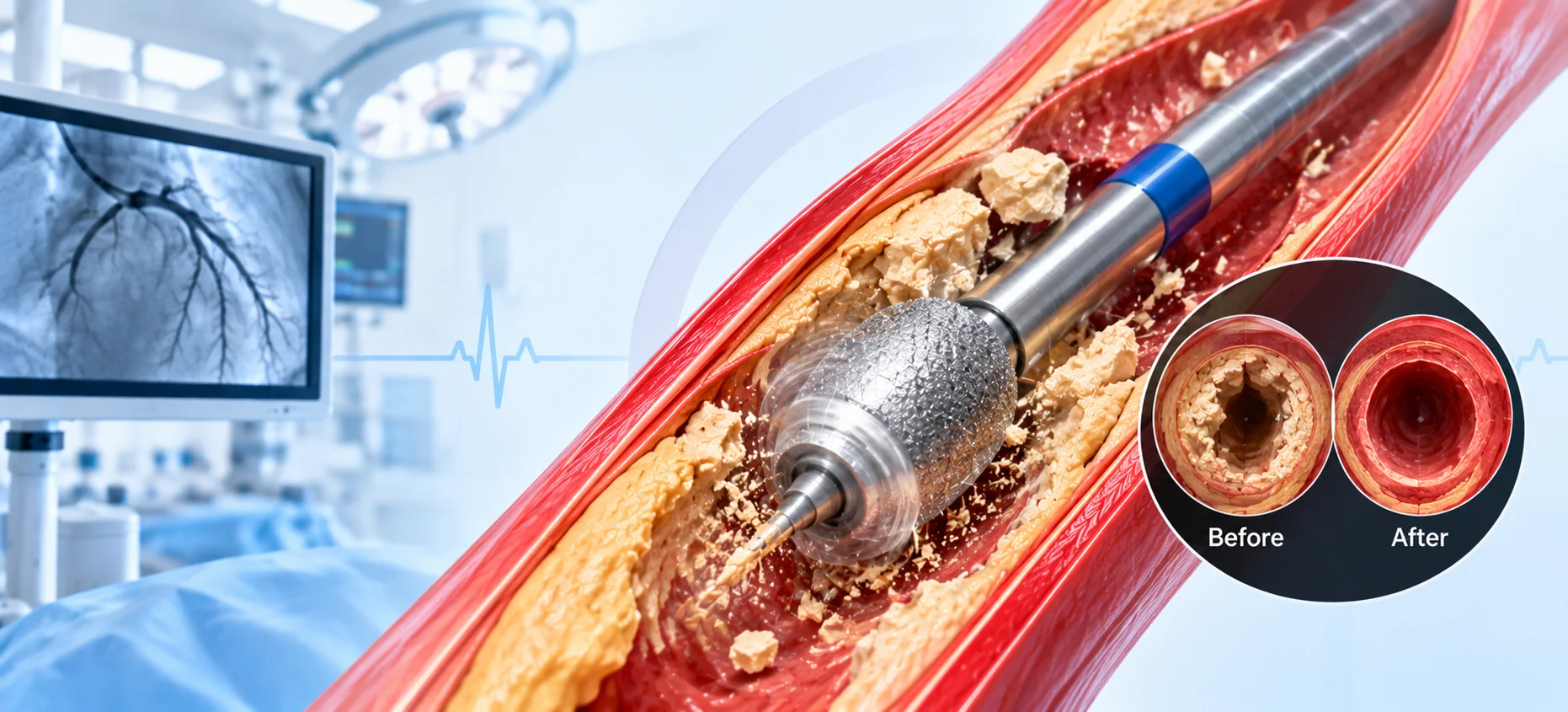
Some coronary blockages contain heavily calcified or otherwise difficult-to-treat plaque. Specialised plaque-modification techniques may be considered in selected cases.
Rotational atherectomy uses a specialised device to modify calcified plaque and facilitate treatment of the coronary artery. Laser-based techniques may also be used in selected complex lesions.
The technique is selected based on the anatomy and characteristics of the coronary lesion, particularly when severe calcification or complex plaque makes conventional treatment challenging.
Understanding your symptoms, diagnosis and treatment goals is the first step.

Imaging, anatomy and clinical findings help determine the appropriate approach.
The selected catheter-based technique is performed with continuous clinical monitoring.
Imaging and angiography are used to understand the location and characteristics of the blockage.
The selected plaque-modification technique is used to prepare the lesion for further treatment.
Balloon angioplasty and, when appropriate, stent placement may follow lesion preparation.
Post-procedure monitoring and medication are tailored to the patient's clinical needs.
These are specialised procedures performed in selected complex coronary cases and require careful assessment of potential benefits and risks.
A personalised consultation can help you understand your diagnosis, available options and the next appropriate step.
Clear answers to common questions about symptoms, evaluation and treatment.
View All FAQs→Rotational atherectomy is a specialised technique used during angioplasty to modify hard calcium deposits inside a coronary artery. It helps prepare a heavily calcified narrowing for balloon treatment and stent placement.
It may be needed when calcium makes a blockage too rigid for standard balloons to treat adequately. The cardiologist decides based on the artery’s anatomy and procedural findings.
By modifying hard calcium, the procedure helps balloons and stents pass through and expand within the narrowed area. Adequate stent expansion is important for a successful result.
Usually, it is a preparation step within an angioplasty procedure. Balloon treatment and, when appropriate, stent placement follow to improve blood flow.
No. Treatment depends on the amount and distribution of calcium. Other options include specialised balloons or intravascular lithotripsy, which uses pressure waves to fracture calcium.
