
Assessment
Understanding your symptoms, diagnosis and treatment goals is the first step.
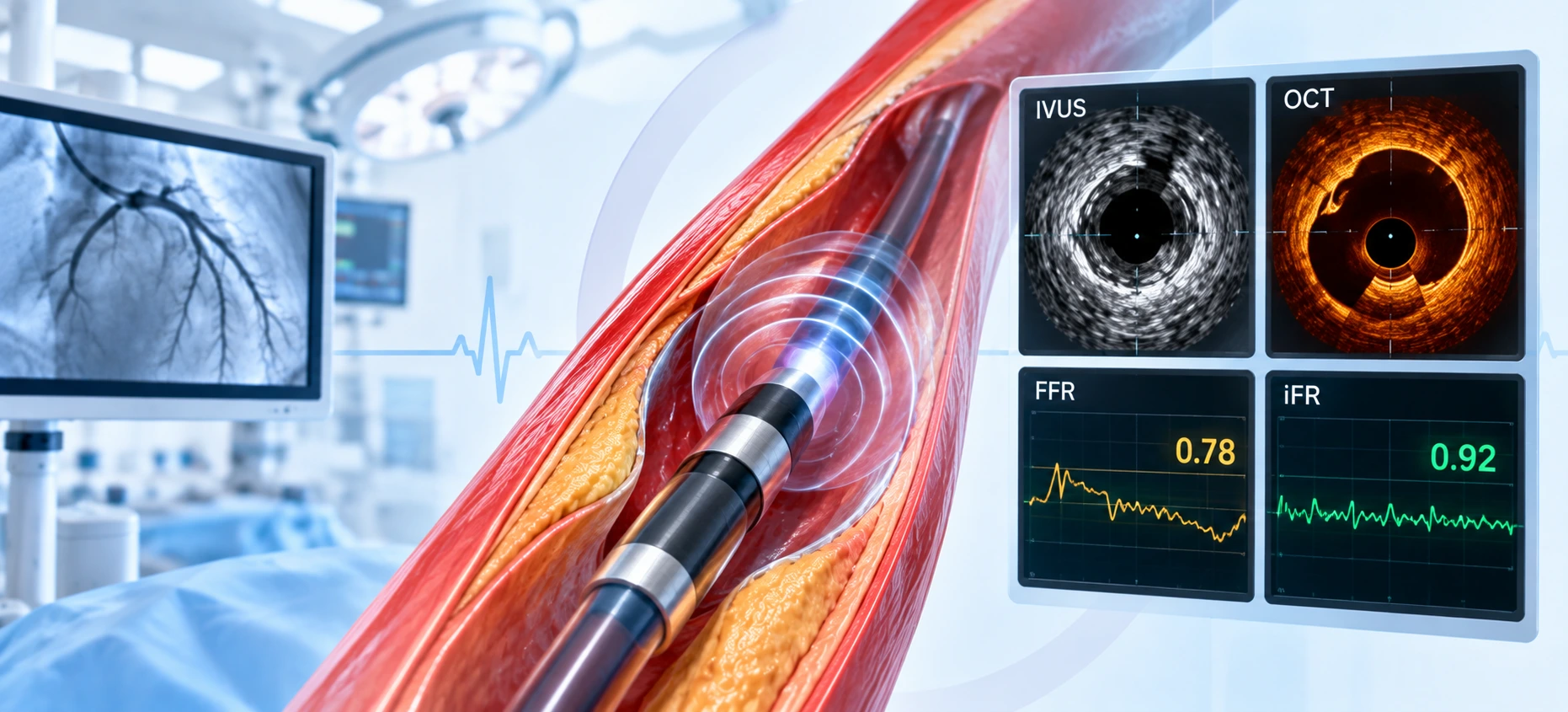
IVUS and OCT are advanced intravascular imaging techniques that provide detailed information about the inside of a coronary artery.
FFR and iFR are physiological assessment techniques that help determine whether a coronary narrowing is likely to limit blood flow.
They may be considered when angiography alone does not provide enough information to guide an important treatment decision.
Understanding your symptoms, diagnosis and treatment goals is the first step.

Imaging, anatomy and clinical findings help determine the appropriate approach.

The selected catheter-based technique is performed with continuous clinical monitoring.
The cardiologist determines what additional anatomical or physiological information is needed.
IVUS or OCT may provide detailed information about plaque, vessel size and lesion characteristics.
FFR or iFR can help assess the functional significance of a coronary narrowing.
The additional information can support decisions about whether and how a coronary lesion should be treated.
These are specialised diagnostic tools and their use depends on the patient's anatomy, clinical presentation and treatment plan.
A personalised consultation can help you understand your diagnosis, available options and the next appropriate step.
Clear answers to common questions about symptoms, evaluation and treatment.
View All FAQs→Intravascular ultrasound (IVUS) and optical coherence tomography (OCT) are imaging techniques that show detailed views from inside a coronary artery. They help assess plaque, artery size and stent placement.
They help the cardiologist assess calcium, choose an appropriate stent size and check whether the stent has expanded properly against the artery wall. This is particularly useful in complex procedures.
Fractional flow reserve (FFR) and instantaneous wave-free ratio (iFR) are pressure-based measurements taken across a coronary narrowing. They help determine whether a blockage significantly restricts blood flow.
An angiogram shows how narrow an artery looks, while FFR or iFR assesses its effect on blood flow. These measurements can help guide treatment and avoid unnecessary stenting in suitable patients.
IVUS and OCT show the artery’s structure and the appearance of plaque or a stent. FFR and iFR assess the effect of a narrowing on blood flow. These tools provide complementary information.
