
Assessment
Understanding your symptoms, diagnosis and treatment goals is the first step.
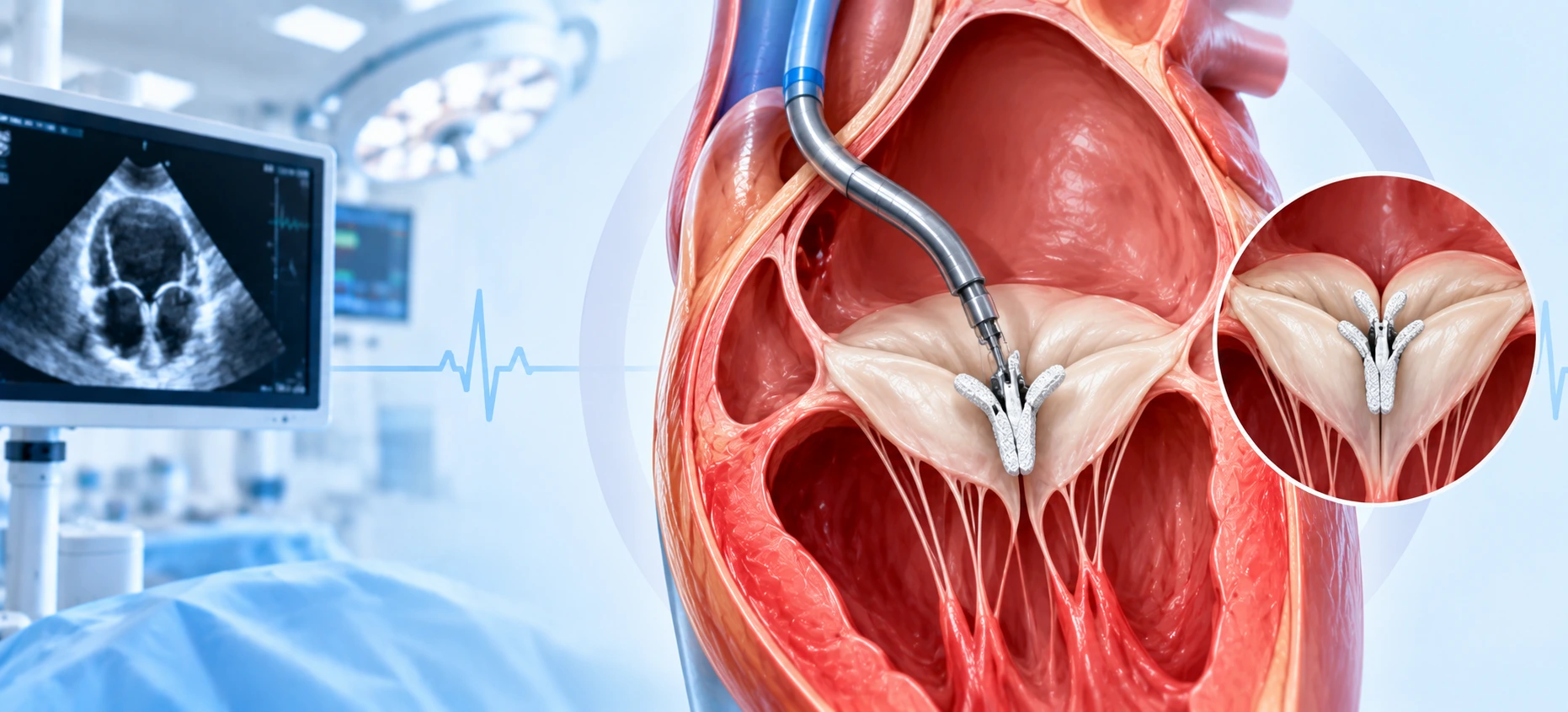
Mitral valve interventions are treatments for selected patients with significant mitral valve disease, including conditions that cause the valve to narrow or leak.
Depending on the valve problem and the patient's anatomy and overall health, catheter-based approaches may be considered in appropriate patients.
The decision depends on valve severity, symptoms, heart function, anatomy, previous treatment and assessment by an appropriate heart team.
Understanding your symptoms, diagnosis and treatment goals is the first step.

Imaging, anatomy and clinical findings help determine the appropriate approach.
The selected catheter-based technique is performed with continuous clinical monitoring.
Clinical examination and cardiac imaging help define the type and severity of mitral valve disease.
Detailed imaging is used to determine whether a catheter-based approach is technically suitable.
The selected catheter-based technique is performed under appropriate imaging and monitoring.
Valve function, symptoms and recovery are assessed during follow-up.
Not every patient with mitral valve disease is suitable for a catheter-based intervention. Individual evaluation is essential.
Clear answers to common questions about symptoms, evaluation and treatment.
View All FAQs →Mitral regurgitation is leakage of blood backward through the mitral valve when the heart contracts. It can result from primary valve disease or changes in the left ventricle.
Symptoms can include breathlessness, reduced exercise tolerance, fatigue, palpitations, swelling, and eventually heart failure.
Treatment is considered when regurgitation is severe and causes symptoms, ventricular enlargement or dysfunction, pulmonary hypertension, atrial fibrillation, or other high-risk features.
Yes. In suitable patients, transcatheter edge-to-edge repair such as MitraClip or other catheter-based therapies can reduce regurgitation without open-heart surgery.
MitraClip is a catheter-delivered device that grasps the mitral valve leaflets and brings them together, reducing the amount of backward leakage.
