
This page presents a patient-friendly, website-formatted version based on the original article. View the original article →
Overview
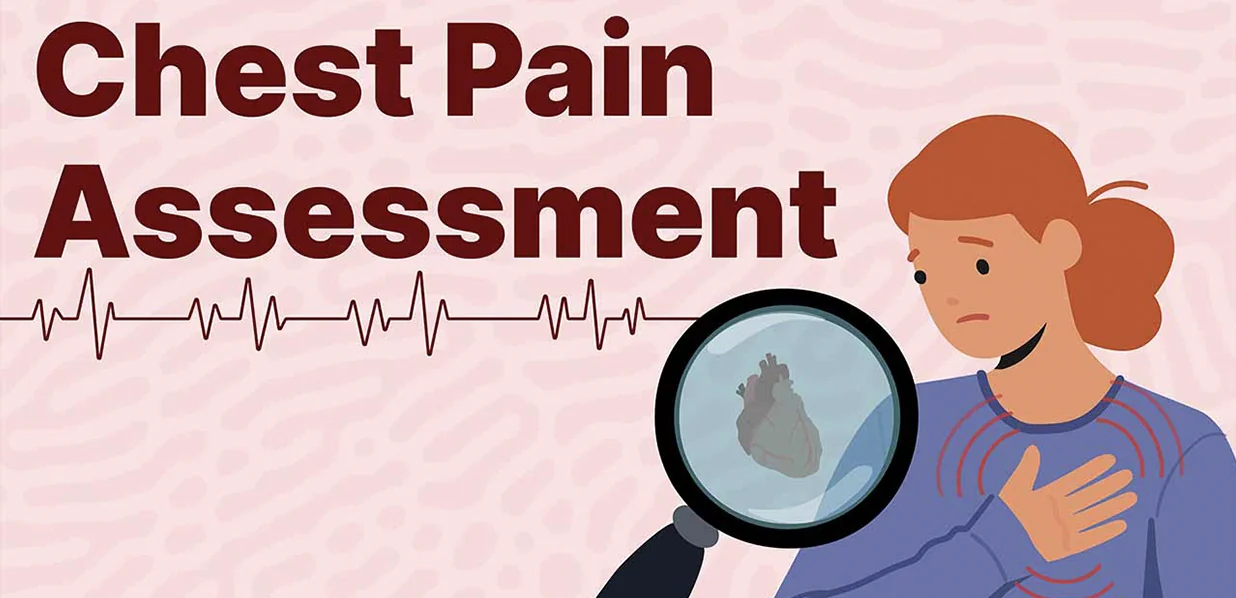
Chest pain is commonly associated with heart attack, but the source emphasizes that not every chest pain is a heart attack and not every heart attack presents with chest pain. It discusses the uncertainty involved in clinical diagnosis and the need to consider symptoms, examination and investigations together rather than relying on one symptom or one test.
Key points
Chest pain is commonly associated with heart attack, but the source emphasizes that not every chest pain is a heart attack and not every heart attack presents with chest pain. It discusses the uncertainty involved in clinical diagnosis and the need to consider symptoms, examination and investigations together rather than relying on one symptom or one test.
This article is for patient education. Individual symptoms, test results and treatment decisions should be discussed with the treating doctor.
Key Takeaways
- Understand the main concepts discussed in this article.
- Use the information to prepare questions for your doctor.
- Do not change medicines or treatment based on an article alone.
- Seek timely medical attention when symptoms require urgent evaluation.
The information on this page is for general educational purposes and is not a substitute for professional medical advice, diagnosis or treatment.